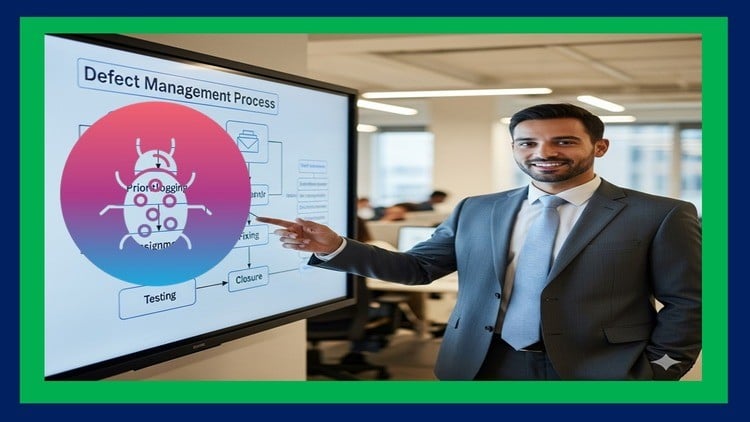
Defect-Free Scrum: Essential Practices for Scrum Masters
⏱️ Length: 1.5 total hours
⭐ 4.46/5 rating
👥 4,452 students
🔄 June 2024 update
Add-On Information:
Note➛ Make sure your 𝐔𝐝𝐞𝐦𝐲 cart has only this course you're going to enroll it now, Remove all other courses from the 𝐔𝐝𝐞𝐦𝐲 cart before Enrolling!
-
Course Caption: Defect-Free Scrum: Essential Practices for Scrum Masters
- Length: 1.5 total hours
- Rating: 4.46/5 (highly rated)
- Students: 4,452+ (as of June 2024 update)
- Latest Update: June 2024
-
Defect Management for Scrum Masters
This course empowers Scrum Masters with the strategic and practical expertise to champion quality within Agile teams. It focuses on embedding a robust defect prevention and resolution culture, ensuring delivered product increments are not just functional, but truly exceptional. Transform potential vulnerabilities into opportunities for continuous improvement and cultivate an environment where quality is a shared responsibility, facilitated directly by you.
-
Course Overview
- Discover how a Scrum Master actively minimizes defect occurrence, fostering a proactive, preventative mindset across the entire Development Team.
- Explore the Scrum Master’s crucial role in building a high-quality product culture, directly influencing team morale and stakeholder confidence.
- Identify systemic organizational and team patterns contributing to defects, addressing root causes rather than merely surface-level issues.
- Gain actionable strategies to facilitate collaborative quality discussions, integrating defect prevention and resolution seamlessly into every sprint cycle.
- Learn to interpret defect metrics and trends, translating data into meaningful insights that drive continuous product and process enhancement.
- Position yourself as a quality advocate, guiding your team to consistently deliver pristine, high-value product increments.
-
Requirements / Prerequisites
- A foundational understanding of the Scrum Framework, including its core roles, events, and artifacts, is highly beneficial.
- Some practical experience within an Agile team, ideally as a Scrum Master or in a similar leadership role, will aid comprehension and application.
- An eagerness to significantly enhance product quality and embrace a continuous improvement mindset is key to maximizing course value.
-
Skills Covered / Tools Used
- Quality Culture Advocacy: Develop skills to embed a ‘shift-left’ quality mentality, starting defect prevention at the earliest development stages.
- Collaborative Quality Facilitation: Master facilitating team discussions around quality standards, Definition of Done, and effective bug reporting protocols.
- Defect Lifecycle Governance: Guide your team efficiently through the defect lifecycle, from initial reporting to final verification and closure.
- Impediment Resolution for Quality: Strengthen your ability to identify and swiftly remove obstacles hindering quality or delaying defect resolution.
- Data-Driven Insights: Utilize simple metrics and reporting features (e.g., within Jira, Azure DevOps, or spreadsheets) to analyze defect trends and optimize processes.
- Cross-functional Quality Collaboration: Enhance cooperation between developers, testers, and product owners to collectively address quality issues.
- Continuous Process Enhancement: Leverage defect analysis insights to continually refine development processes, moving towards a zero-defect product and culture.
-
Benefits / Outcomes
- Significantly Higher Product Quality: Consistently deliver robust product increments, drastically reducing post-release defects and boosting user satisfaction.
- Enhanced Team Efficiency & Morale: Minimize rework and inter-team friction, leading to increased productivity, greater team confidence, and a more positive environment.
- Strengthened Stakeholder Trust: Build strong relationships with stakeholders through reliable feature delivery, fostering unwavering confidence in your team’s capabilities.
- Accelerated Feature Delivery: Streamline development workflows by eliminating quality bottlenecks, enabling faster delivery of valuable features to market.
- Become a Recognized Quality Leader: Establish yourself as a pivotal enabler of quality, driving impactful improvements across your organization’s product development lifecycle.
- Proactive Quality Management: Transition from reactive bug-fixing to proactive problem-solving, mitigating potential quality issues before they escalate.
- Sustainable Development Practices: Implement strategies ensuring long-term product health, maintainability, and significantly reducing technical debt.
- Demonstrable Return on Investment: Articulate the tangible ROI from improved defect management, showing reduced operational costs and increased customer loyalty.
-
PROS
- Highly Practical & Actionable: Delivers concise, implementable strategies directly applicable to a Scrum Master’s daily challenges and responsibilities.
- Time-Efficient Learning: A focused 1.5-hour duration provides maximum impact for minimal time investment, ideal for busy professionals seeking immediate improvements.
- Proven Effectiveness: A high 4.46/5 rating from over 4,450 students signifies strong peer validation and a trustworthy learning experience.
- Current & Relevant Content: The June 2024 update ensures the course material aligns with contemporary Scrum practices and industry best standards.
-
CONS
- Given its concise duration, the course primarily focuses on principles and strategic oversight, meaning it may not provide extensive hands-on training or advanced tool-specific configurations.
Learning Tracks: English,Office Productivity,Other Office Productivity
Found It Free? Share It Fast!