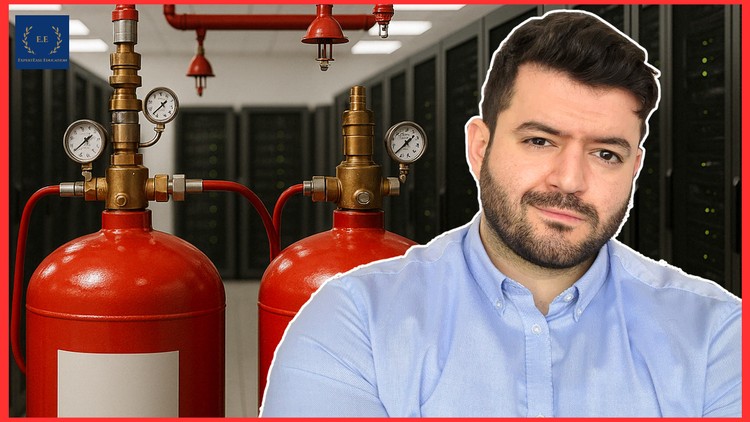
Data Center Fire Infrastructure/Data Center Infrastructure Essentials/Datacenter Systems/Data Center Fire Systems Design
⏱️ Length: 3.1 total hours
⭐ 4.23/5 rating
👥 4,054 students
🔄 December 2025 update
Add-On Information:
Note➛ Make sure your 𝐔𝐝𝐞𝐦𝐲 cart has only this course you're going to enroll it now, Remove all other courses from the 𝐔𝐝𝐞𝐦𝐲 cart before Enrolling!
- Course Caption: Data Center Fire Infrastructure / Data Center Infrastructure Essentials / Datacenter Systems / Data Center Fire Systems Design
- Length: 3.1 total hours
- Rating: 4.23/5 rating
- Students: 4,054 students
- Update: December 2025 update
-
Course Overview
- This intensive 3.1-hour course delves into the critical nuances of fire protection within modern data center environments, moving beyond generic safety protocols to address the unique complexities of mission-critical IT infrastructure.
- Gain a strategic understanding of the inherent fire hazards prevalent in high-density computing spaces, encompassing electrical faults, overheating equipment, battery storage risks, and the presence of combustible materials unique to technological installations.
- Explore the foundational principles of proactive fire safety engineering specifically tailored for data centers, emphasizing the paramount importance of integrated design from conception rather than piecemeal additions.
- Uncover the essential role of robust fire fighting design in ensuring business continuity and preventing catastrophic data loss, highlighting its direct impact on organizational resilience and operational uptime.
- Examine the intersection of data center architecture and fire safety regulations, including a comprehensive overview of international and regional standards, ensuring designs are not only effective but also fully compliant with industry benchmarks.
- Develop an awareness of the financial implications of inadequate fire protection, contrasting the significant costs of prevention and proper design with the devastating economic impact of a data center fire event, including reputational damage and data recovery expenses.
-
Requirements / Prerequisites
- Basic Familiarity with Data Center Components: An introductory understanding of server racks, cooling systems, power distribution units, network hardware, and general data center layout will be beneficial for contextualizing fire safety challenges.
- Fundamental Engineering or IT Concepts: A general grasp of how complex systems interact and the principles of system reliability can enhance comprehension of advanced fire fighting design strategies and their integration.
- Interest in Critical Infrastructure Safety: A genuine desire to learn about protecting essential technological assets and contributing to high-availability environments is key to maximizing learning outcomes.
- No Advanced Prior Knowledge Required: While a background in fire safety or electrical engineering is certainly a plus, the course is structured to provide necessary foundational knowledge for its specialized topic without requiring deep prior expertise.
-
Skills Covered / Tools Used
- Strategic Risk Assessment Methodologies: Master techniques for systematically identifying, analyzing, and prioritizing potential fire risks specific to data center layouts, equipment types, and operational procedures, developing a comprehensive risk profile.
- Advanced Fire Detection System Selection: Learn to evaluate and specify various early warning detection technologies, including aspirating smoke detection (ASD), very early warning fire detection (VEWFD), and specialized heat detectors, considering their application in dynamic data center environments.
- Passive Fire Protection Integration: Understand how to effectively incorporate passive elements such as fire-rated barriers, compartmentalization strategies, and proper cable management into the overall data center design to slow fire spread and contain incidents, protecting adjacent zones.
- Emergency Response Planning & Coordination: Develop skills in contributing to the creation of comprehensive emergency response plans, including fire suppression activation sequences, emergency shutdown procedures, and personnel evacuation protocols, in conjunction with existing Building Management Systems (BMS).
- Regulatory Compliance and Standards Interpretation: Gain proficiency in navigating and applying relevant fire codes and industry standards (e.g., NFPA 75, ISO 22237) to ensure all design aspects meet stringent safety and operational requirements, minimizing legal and operational liabilities.
- System Interoperability Design Principles: Explore how to integrate fire detection and suppression systems seamlessly with data center environmental monitoring, power management, and security systems for a unified, intelligent safety posture and coordinated response.
- Conceptual Use of Design Software Principles: While not a software training course, you will grasp the underlying design principles that inform professional layout tools for mapping fire zones, equipment placement, and suppression system components, preparing you for practical application.
-
Benefits / Outcomes
- Elevated Professional Credibility: Position yourself as a specialist in a niche yet vital area of data center operations, enhancing your value to employers and project teams concerned with infrastructure resilience and safety.
- Contribution to Organizational Resilience: Directly impact your company’s ability to withstand and recover from potential fire incidents, safeguarding critical data and maintaining operational continuity in the face of emergencies and disasters.
- Informed Decision-Making: Acquire the knowledge base to make expert recommendations on fire safety investments, technology choices, and design modifications, justifying solutions based on risk, compliance, and cost-effectiveness for long-term strategic planning.
- Enhanced Career Specialization: Open pathways to specialized roles in data center engineering, facilities management, risk assessment, and compliance auditing, particularly in sectors with stringent uptime requirements and high-value data.
- Mastery of Niche Technical Domains: Develop a deep understanding of clean agent system alternatives, water mist systems, and other advanced suppression technologies, along with their specific advantages, limitations, and optimal application in sensitive IT environments.
- Proactive Risk Mitigation: Transform your approach from reactive problem-solving to proactive risk mitigation, embedding safety into the fundamental design and operational lifecycle of data centers, fostering a culture of preventative security.
-
PROS
- Highly Specialized and Relevant: Addresses a critical and often overlooked aspect of data center operations with direct business impact on uptime and data integrity.
- Practical, Actionable Insights: Focuses on real-world design challenges and implementable solutions rather than purely theoretical concepts, providing immediate applicability.
- Career Advancement Potential: Provides unique expertise that can differentiate professionals in a competitive IT infrastructure and facilities management market.
- Business Continuity Focus: Directly contributes to safeguarding critical assets, ensuring uninterrupted service delivery, and protecting valuable organizational data.
- Expert-Level Content Delivery: Despite its brevity, the course targets delivering high-value, concentrated knowledge from a practical perspective, maximizing learning efficiency.
-
CONS
- Limited Depth Due to Short Duration: While comprehensive for its length, a 3.1-hour course can only cover so much, potentially requiring further self-study for absolute mastery of all intricate sub-topics and specific product implementations.
Learning Tracks: English,IT & Software,Network & Security
Found It Free? Share It Fast!