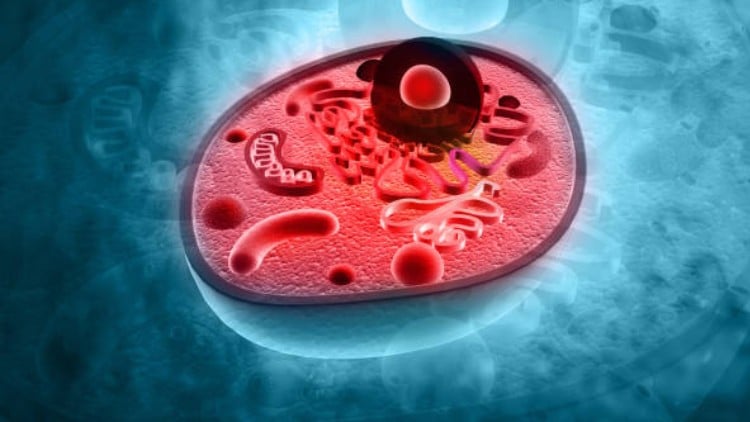
Exploring the Building Blocks of Life: A Beginner’s Guide to Cell Structure and Function
⏱️ Length: 4.5 total hours
⭐ 4.13/5 rating
👥 4,916 students
🔄 November 2024 update
Add-On Information:
Note➛ Make sure your 𝐔𝐝𝐞𝐦𝐲 cart has only this course you're going to enroll it now, Remove all other courses from the 𝐔𝐝𝐞𝐦𝐲 cart before Enrolling!
- Course Overview
- Dive into the universal principles governing all living organisms, exploring life’s fundamental blueprint from its smallest, most intricate level.
- Uncover the astounding variety and specialization of cells, from single-celled organisms to the complex tissues and organs of multicellular life.
- Gain a holistic perspective on how billions of coordinated cellular activities underpin every biological process, from thought to movement, growth, and repair.
- Appreciate the delicate balance and intricate communication networks essential for cellular survival and the maintenance of homeostasis within an organism.
- Contextualize the significance of cellular health and dysfunction as the root cause or indicator of many biological phenomena, including disease development and aging.
- Experience a thoughtfully designed, concise learning journey perfect for anyone seeking a robust foundational understanding in biology without a major time commitment.
- Requirements / Prerequisites
- No prior scientific background is needed: This course is crafted specifically for absolute beginners and curious minds eager to delve into biology.
- Basic digital literacy: A stable internet connection and comfort with online learning platforms are the only technical requirements for successful participation.
- An inquisitive mind: Your primary prerequisite is a genuine interest in understanding how life works at its most microscopic, yet profoundly impactful, level.
- Skills Covered / Tools Used
- Differentiating cell types: Acquire the ability to distinguish between prokaryotic and eukaryotic cells, understanding their evolutionary relationships and fundamental structural differences.
- Visualizing cellular architecture: Develop an eye for interpreting complex cellular diagrams and models, aiding in the mental reconstruction of dynamic 3D cellular environments.
- Understanding cellular dynamics: Grasp the concept of cells as dynamic entities, constantly responding to their internal and external environments, and adapting to changes.
- Appreciating biochemical interplay: Recognize the fundamental chemical principles that enable cellular activities, from nutrient uptake to energy conversion and waste expulsion, without deep chemical equations.
- Connecting micro to macro biology: Strengthen your capacity to link events occurring at the cellular level to observable physiological, developmental, and ecological phenomena in living organisms.
- Developing scientific literacy: Become comfortable with essential biological terminology, enhancing your ability to read, understand, and critically engage with scientific articles and discussions.
- Introduction to microscopy concepts: Briefly understand how different microscopy techniques have revolutionized our ability to visualize and study the previously invisible world of cells and their components.
- Benefits / Outcomes
- Empowered scientific understanding: Establish a robust conceptual framework that serves as an excellent basis for further exploration into any life science discipline, from molecular biology to ecology.
- Enhanced biological intuition: Cultivate an intuitive grasp of how organisms function, starting from their cellular foundations, making more complex biological concepts significantly more approachable.
- Improved critical thinking about health: Gain a foundational understanding of how cellular integrity and function impact overall health and disease, enabling more informed personal health decisions.
- Pathway to advanced studies: Build confidence and readiness for university-level biology courses, providing a significant head start in your academic journey and career aspirations.
- A broadened world view: Marvel at the incredible complexity, efficiency, and interconnectedness of life at its most basic level, fostering a deeper appreciation for the natural world.
- Effective communication skills: Develop the vocabulary and understanding to articulate fundamental biological concepts clearly and accurately, both in academic and everyday contexts.
- Sparking further curiosity: This course often acts as a catalyst, inspiring students to pursue deeper dives into specific areas of cellular biology, biotechnology, medicine, or related scientific fields.
- PROS
- Beginner-friendly: Specifically designed to introduce complex topics without requiring prior biological knowledge, making it accessible to learners from all backgrounds.
- High student satisfaction: A strong rating of 4.13/5 from nearly 5,000 students indicates highly effective teaching, engaging content, and valuable learning experiences.
- Time-efficient learning: At just 4.5 total hours, it offers a comprehensive foundational overview that respects your schedule, allowing for quick and impactful learning.
- Current and relevant: Updated in November 2024, ensuring you receive the most recent scientific understanding and accurate information in the field of cell biology.
- CONS
- Limited in-depth specialization: Due to its foundational and beginner-friendly nature, the course provides a broad overview rather than deep dives into highly specialized cellular mechanisms or advanced research methodologies.
Learning Tracks: English,Teaching & Academics,Online Education
Found It Free? Share It Fast!