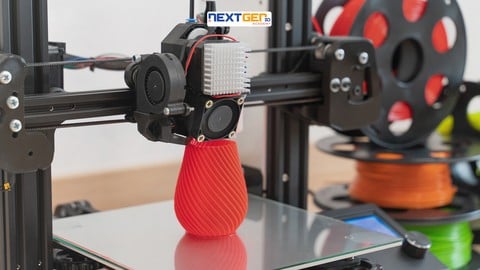
Master Dual Extrusion, Material Compatibility, Interface Bonding & Color Blending for Advanced 3D Printing
What You Will Learn:
- Understand dual extrusion and multi-material printing systems
- Master material compatibility and selection strategies
- Learn interface bonding techniques for strong multi-material parts
- Apply color theory to multi-color 3D printing
- Create gradients and advanced color transitions
- Optimize slicer settings for multi-material workflows
- Troubleshoot common multi-material printing issues
- Design parts specifically for multi-material manufacturing
- Analyze real-world industry applications and case studies
Learning Tracks: English
Note➛ Make sure your 𝐔𝐝𝐞𝐦𝐲 cart has only this course you're going to enroll it now, Remove all other courses from the 𝐔𝐝𝐞𝐦𝐲 cart before Enrolling!
Add-On Information:
- Course Overview
- This masterclass offers a deep theoretical exploration of multi-material and multi-color 3D printing, moving beyond single-material limitations. It establishes a comprehensive framework for understanding the intricate interplay between material science, advanced printer mechanics, and sophisticated design principles. You will learn to integrate diverse materials, each with unique properties, into cohesive printed objects, significantly expanding functional utility and aesthetic appeal. The course provides a robust theoretical foundation for creating parts with localized characteristics, gradient effects, and intricate visual patterns, essential for next-generation product development and artistic expression. It bridges the gap between conceptual design and the practical realities of advanced fabrication, preparing participants to innovate within the rapidly evolving landscape of multi-property components.
- Uncover the intricate science behind combining disparate filaments, from molecular interactions at bond interfaces to managing thermal expansion differences.
- Explore the artistic dimension of multi-color printing, learning how to translate sophisticated color schemes into tangible 3D objects with precision and vibrancy.
- Gain a holistic perspective on the entire multi-material workflow, encompassing initial design considerations, material selection, critical slicer configurations, and post-print evaluation.
- Understand the evolution of 3D printing from single-purpose tools to integrated systems capable of producing highly customized, multi-functional components.
- Requirements / Prerequisites
- Foundational 3D Printing Knowledge: A basic understanding of FDM (Fused Deposition Modeling) principles, including how 3D printers operate, common terminology, and the general printing process.
- Familiarity with 3D Modeling Concepts: While extensive CAD software proficiency isn’t required, a conceptual understanding of how 3D models are created will aid in grasping design for multi-material applications.
- Interest in Advanced Additive Manufacturing: A strong curiosity and willingness to explore the cutting edge of 3D printing technology, particularly in material science and aesthetic applications.
- Analytical Mindset: The ability to approach technical challenges systematically and think critically about problem-solving in a complex manufacturing environment.
- Access to a Computer: A personal computer capable of running common slicer software for conceptual understanding and theoretical application.
- No Prior Multi-Extrusion Experience Required: This course builds knowledge from the ground up for multi-material and multi-color techniques.
- Skills Covered / Tools Used
- Advanced Extrusion Management: Master theoretical control over multiple print heads, understanding mechanisms for material switching, purge routines, and volumetric flow synchronization for seamless transitions.
- Material Property Analysis & Pairing: Develop expert understanding of diverse polymer characteristics (thermal, mechanical, chemical) to strategically select and pair materials for optimal inter-layer adhesion and desired final part properties.
- Interface Adhesion Science: Gain theoretical insights into molecular forces governing material bonding, exploring concepts like surface energy and intermolecular attraction to create robust, durable multi-material interfaces.
- Digital Color Blending & Management: Learn advanced techniques for translating complex digital color palettes into precise print instructions, understanding RGB/CMYK values and managing color accuracy across different materials.
- Sophisticated Geometry Segmentation: Acquire methods for logically dividing complex 3D models into distinct material and color zones within CAD environments, facilitating specific property and aesthetic assignments.
- Multi-Material Slicer Configuration: Deep dive into specialized features of leading slicer software for multi-extrusion systems, including advanced purge tower optimization, prime line strategies, and intelligent infill merging.
- Post-Processing Implications for Multi-Material Parts: Understand how combining different materials impacts post-processing (support removal, finishing) and learn to anticipate these challenges during design.
- Systematic Troubleshooting Methodologies: Develop a structured approach to diagnosing and resolving intricate multi-material and multi-color printing failures, identifying root causes related to material incompatibility or slicer misconfigurations.
- Design for Multi-Material Manufacturing (DfMM): Learn theoretical principles for designing parts from the ground up with multi-material manufacturing in mind, optimizing geometries and material distribution for enhanced functionality and aesthetics.
- Benefits / Outcomes
- Unleashed Design Creativity: Break free from single-material constraints, enabling conceptualization and realization of innovative product designs integrating diverse functionalities and intricate aesthetics.
- Enhanced Functional Component Development: Acquire knowledge to engineer parts with precisely localized material properties, such as a rigid core with a flexible outer layer, leading to superior performance and utility.
- Mastery of Advanced Aesthetics: Produce visually compelling 3D prints with complex multi-color patterns, smooth gradients, and finely blended transitions, elevating the artistic and commercial appeal of creations.
- Strategic Problem-Solving Expertise: Develop a refined analytical toolkit to systematically diagnose and preemptively mitigate unique challenges in multi-material and multi-color printing workflows.
- Innovation Leadership: Position yourself at the forefront of additive manufacturing by understanding fundamental principles driving advancements in multi-property and multi-functional 3D printing.
- Broadened Industry Applicability: Equip yourself with highly specialized skills applicable across diverse sectors, including product design, engineering, prototyping, and medical modeling, increasing professional value.
- Optimized Resource Utilization: Learn to strategically combine materials to reduce overall part cost, improve structural integrity, or achieve specific performance goals for efficient manufacturing.
- Confident Project Execution: Gain the theoretical confidence and practical framework to undertake ambitious multi-material and multi-color projects, transforming complex ideas into tangible, high-quality finished products.
- Sustainable Design Thinking: Understand how judicious use of multi-materials can contribute to more durable and repairable products, extending lifecycles and potentially reducing waste.
- PROS
- Comprehensive Theoretical Depth: Provides unparalleled understanding of the science and principles behind advanced multi-material and multi-color printing.
- Empowers Creative & Functional Innovation: Equips learners to design and produce complex parts with superior aesthetics and integrated functionalities.
- Highly Relevant for Future Manufacturing: Prepares participants for the evolving demands of advanced additive manufacturing industries.
- Systematic Problem-Solving Approach: Teaches methodologies to debug and optimize intricate multi-extrusion printing processes effectively.
- Strong Foundation for Hands-On Practice: Lays essential theoretical groundwork for those planning to delve into practical multi-material printing.
- CONS
- Primarily Theoretical Focus: While comprehensive, direct hands-on operational practice with multi-material printers is not the primary focus, requiring additional practical application for complete mastery.