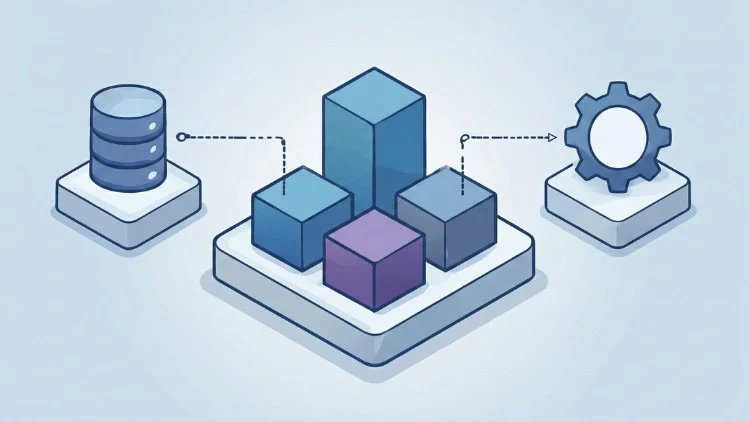
Unofficial Exams For Salesforce System Architect Domain: Integration, Identity, Lifecycle Management Practice Scenarios.
👥 341 students
🔄 January 2026 update
Add-On Information:
Note➛ Make sure your 𝐔𝐝𝐞𝐦𝐲 cart has only this course you're going to enroll it now, Remove all other courses from the 𝐔𝐝𝐞𝐦𝐲 cart before Enrolling!
- Course Overview
- Comprehensive Examination of Domain-Specific Scenarios: This specialized course provides an exhaustive collection of mock exams meticulously designed to mirror the complexity of the Salesforce Certified System Architect credential, focusing specifically on high-stakes architectural decision-making processes.
- Strategic Focus on Off-Platform Connectivity: Unlike foundational certifications, this course emphasizes the intricate logic required to bridge Salesforce with external enterprise systems, ensuring that architects can maintain security and performance across a heterogeneous technical landscape.
- Updated for the 2026 Technical Ecosystem: All practice questions and descriptive rationales have been refreshed to reflect the latest platform enhancements as of January 2026, including modern API versions, updated encryption standards, and the most recent shifts in the Salesforce development lifecycle.
- Deep Dive into the Three Core Pillars: The curriculum is structured around the three most challenging domains for aspiring System Architects: Integration Architecture, Identity and Access Management, and the Development Lifecycle and Deployment practices.
- Scenario-Based Logic Testing: Rather than simple rote memorization, the practice exams utilize complex, multi-layered business scenarios that require candidates to evaluate technical trade-offs, governance models, and long-term scalability impacts before selecting the optimal solution.
- Requirements / Prerequisites
- Foundational Salesforce Certification Status: It is highly recommended that participants already hold the Salesforce Platform Developer I and Platform App Builder certifications, as this course assumes a mastery of the core declarative and programmatic capabilities of the platform.
- Advanced Understanding of Web Security: A functional knowledge of web-based security protocols, specifically how digital signatures, certificates, and transport layer security (TLS) operate, is essential for successfully navigating the Identity and Access Management portions of these exams.
- Enterprise Architecture Awareness: Prospective students should possess a working understanding of general enterprise software architecture principles, including middleware functionality, message queues, and the differences between stateful and stateless communication protocols.
- Professional Experience with the ALM: Familiarity with the Application Lifecycle Management process, including source-driven development, branching strategies in version control systems, and the use of continuous integration tools, will significantly enhance the learning experience.
- Skills Covered / Tools Used
- Mastering Complex Identity Flows: Participants will refine their ability to implement and troubleshoot sophisticated OAuth 2.0 flows, OpenID Connect, and SAML-based Single Sign-On configurations to ensure seamless and secure user authentication across multiple service providers.
- Designing Robust Integration Patterns: The course covers the strategic application of various integration patterns such as Request and Reply, Fire and Forget, Batch Data Synchronization, and Remote Process Invocation, highlighting the specific use cases for each.
- Deployment and Governance Frameworks: Students will learn to evaluate different environment management strategies, including the use of Scratch Orgs, Sandboxes, and Change Sets, while adhering to strict architectural governance and compliance standards.
- API Selection and Optimization: Practical evaluation of REST, SOAP, Bulk, and Streaming APIs is covered to help architects choose the correct interface based on data volume, frequency of updates, and system concurrency limits.
- Securing the System Landscape: The course explores advanced security tools and concepts including Salesforce Shield, Event Monitoring, Platform Encryption, and the implementation of sophisticated programmatic sharing models to protect sensitive organizational data.
- Benefits / Outcomes
- Validated Readiness for Certification: By completing these practice scenarios, students will gain the confidence and technical vocabulary necessary to successfully pass the official Salesforce Certified System Architect proctored exam on their first attempt.
- Expertise in Scalable Design: Learners will walk away with the ability to design system architectures that are not only functional but also highly scalable, capable of handling massive data volumes and high-frequency transaction rates without degradation.
- Strategic Career Advancement: Achieving the System Architect status is a significant milestone toward becoming a Salesforce Technical Architect; this course bridges the knowledge gap required to reach that elite professional tier within the ecosystem.
- Enhanced Architectural Decision-Making: The practice exams teach students how to think like an architect, weighing the pros and cons of custom code versus declarative tools and selecting the path that minimizes technical debt.
- Immediate Professional Application: The scenarios provided are based on real-world enterprise challenges, allowing students to apply the solutions and logic learned directly to their current professional projects and architectural consulting roles.
- PROS
- Realistic Question Complexity: The mock exams are intentionally designed to be slightly more difficult than the actual test, ensuring that candidates are over-prepared for the nuances of the official questions.
- Exhaustive Answer Explanations: Each question includes a thorough breakdown of why the correct answer is the best choice and why the distractors are incorrect, providing a powerful secondary learning mechanism.
- Focus on Modern Standards: The course avoids legacy architecture and instead focuses on contemporary best practices such as microservices, event-driven architecture, and modern DevOps methodologies.
- CONS
- Lack of Hands-On Environments: As this is a practice exam course, it focuses exclusively on theoretical scenarios and logic testing rather than providing a sandbox or lab environment for live configuration and coding practice.
Learning Tracks: English,IT & Software,IT Certifications
Found It Free? Share It Fast!