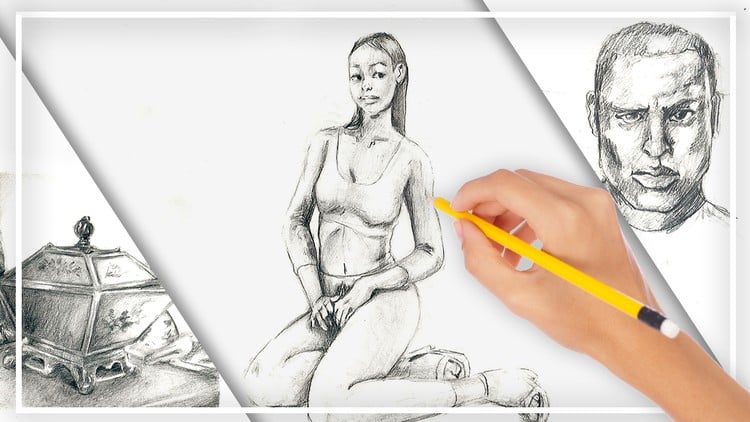
From sketching to human figures and landscapes, anyone can learn how to draw like a pro with this step-by-step course!
⏱️ Length: 34.6 total hours
⭐ 4.43/5 rating
👥 16,978 students
🔄 May 2023 update
Add-On Information:
“`html
Note➛ Make sure your 𝐔𝐝𝐞𝐦𝐲 cart has only this course you're going to enroll it now, Remove all other courses from the 𝐔𝐝𝐞𝐦𝐲 cart before Enrolling!
- Course Overview
- Embark on a comprehensive artistic journey designed to transform complete novices into confident and skilled visual artists.
- This meticulously structured megacourse spans over 34 hours of engaging content, providing an immersive learning experience.
- Demystify the art of drawing, breaking down complex techniques into easily digestible, actionable steps.
- Progress from foundational concepts to advanced rendering of subjects like expressive human figures and breathtaking landscapes.
- Foster a deep understanding of artistic principles that empower informed creative decisions, moving beyond rote memorization.
- Cultivate a personal artistic voice by exploring the interplay of line, form, and shadow across diverse artistic mediums.
- The curriculum is constantly refined, with recent updates ensuring the content remains relevant and cutting-edge.
- Join a thriving community of over 16,000 students, fostering a collaborative and motivating learning environment.
- Achieve a high level of proficiency, reflected in the course’s impressive 4.43/5 average rating.
- Requirements / Prerequisites
- No prior drawing experience is necessary; this course is tailor-made for absolute beginners.
- A genuine passion for art and a willingness to practice consistently are the only essential ingredients.
- Access to a reliable internet connection to stream course videos and access downloadable resources.
- A dedicated workspace where you can comfortably engage in drawing activities without interruption.
- Skills Covered / Tools Used
- Foundational Drawing Techniques: Master the art of constructing images from simple geometric forms and understand how they build complexity.
- Line Work Mastery: Explore the expressive potential of varied line weights and textures to convey form, mood, and detail across different drawing tools.
- Creative Warm-ups & Exercises: Develop hand-eye coordination and stimulate artistic thinking through a series of targeted practice routines.
- Artistic Decision-Making: Uncover the underlying principles that guide effective artistic choices, from composition to rendering.
- Structural Construction: Learn to use organizational lines and guides to build accurate and proportional drawings.
- Perspective & Spatial Awareness: Develop an intuitive understanding of how to represent three-dimensional space on a two-dimensional surface.
- Compositional Tools: Utilize techniques like the viewfinder to frame subjects effectively and create compelling visual narratives.
- Essential Art Supplies: Gain knowledge about the fundamental materials required to begin your drawing journey, including pencils, paper types, and erasers.
- Light & Shadow Dynamics: Comprehend the science and art of shading, understanding how light interacts with form to create volume and depth, starting with the simple sphere.
- Landscape Representation: Capture the essence of natural environments, understanding atmospheric perspective, textures, and the nuances of outdoor scenes.
- Toned Paper Techniques: Explore the unique advantages of working on colored paper, learning how to effectively use highlights and shadows to build form.
- Anatomy & Figure Drawing: Deconstruct the human form, learning to accurately portray proportions, gesture, and anatomy for realistic and stylized figures.
- Character Design: Develop the ability to create unique and memorable characters, infusing them with personality and distinct visual traits.
- Medium Exploration: While focused on foundational drawing, the principles taught are transferable to various dry media.
- Visual Analysis: Hone your ability to observe and interpret the visual world, translating your observations into compelling drawings.
- Digital Sketching Principles: Although primarily analog, the foundational principles are directly applicable to digital drawing workflows.
- Storytelling Through Art: Understand how to use drawing to convey narratives and emotions effectively.
- Benefits / Outcomes
- Gain the confidence to tackle any drawing subject with a structured approach.
- Develop a foundational skillset applicable to a wide range of artistic pursuits, from illustration to fine art.
- Unlock your creative potential and learn to express your ideas visually.
- Significantly improve your observational skills and attention to detail.
- Build a strong portfolio of work that showcases your progress and artistic abilities.
- Develop a deeper appreciation for the art of drawing and its historical significance.
- Acquire a marketable skill that can lead to career opportunities in design, animation, and more.
- Experience the therapeutic and rewarding benefits of engaging in a creative hobby.
- Learn to see the world with an artist’s eye, noticing the interplay of light, shadow, and form in everyday life.
- PROS
- Extensive Content: Over 34 hours of instruction ensures comprehensive coverage of all essential drawing topics.
- Beginner-Friendly: Designed to accommodate learners with no prior experience, making art accessible to everyone.
- High Student Engagement: A large and active student base suggests a valuable and well-received curriculum.
- Practical Application: Focuses on actionable techniques that students can immediately put into practice.
- Expert Instruction: Implies guidance from experienced artists who can impart valuable insights.
- Lifetime Access (Implied): Typically, online courses offer ongoing access, allowing for review and continued learning.
- CONS
- Pacing May Vary: Given the breadth of topics, some learners might find the pace either too fast or too slow for their individual learning style.
“`
Learning Tracks: English,Design,Graphic Design & Illustration
Found It Free? Share It Fast!